








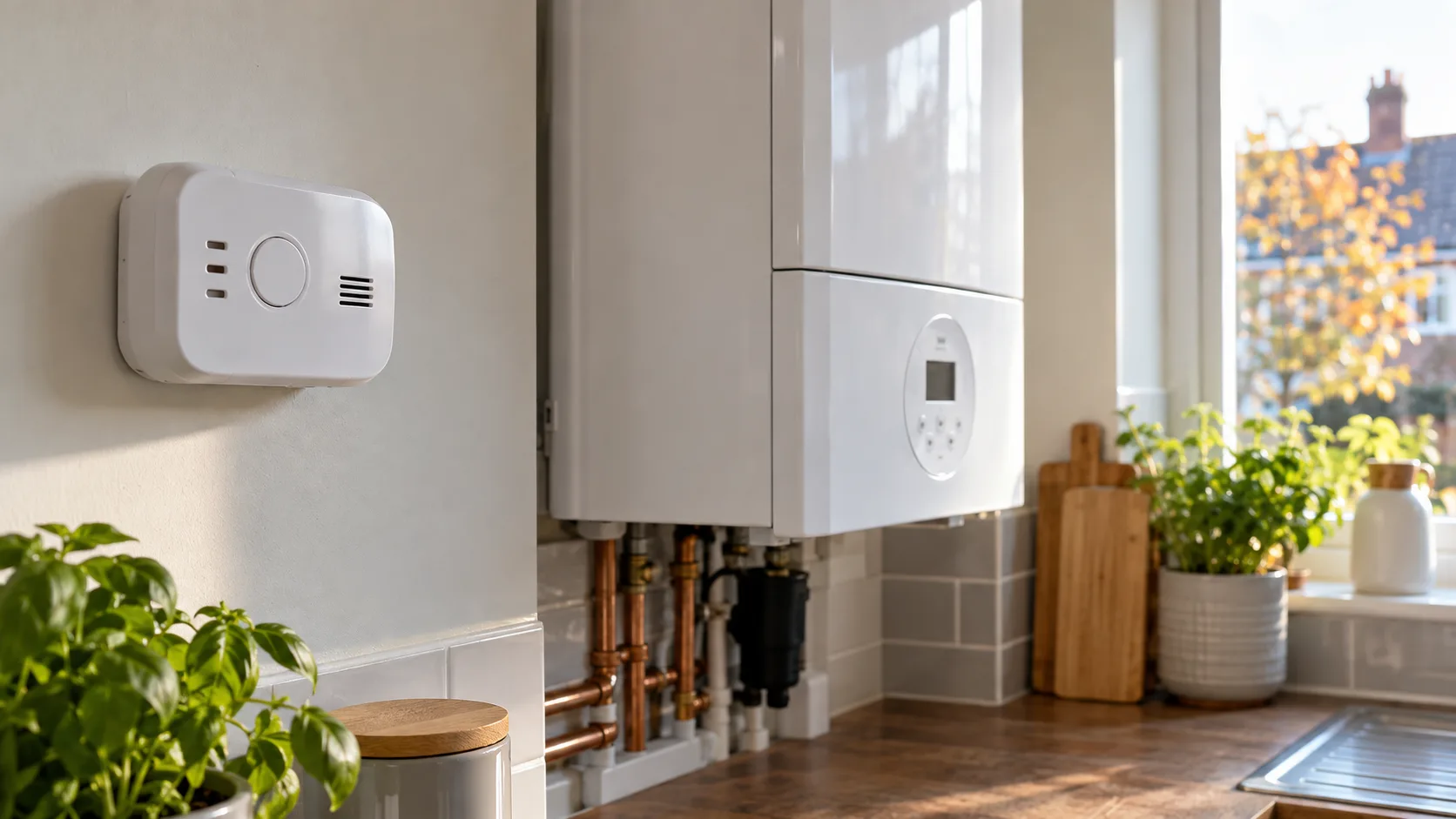
As the heating goes back on across Bristol and Bath, it’s a good moment to check the small device that could save your life. A carbon monoxide (CO) alarm should sit in every room with a fuel-burning appliance, such as a gas boiler, fire or log burner, ideally between one and three metres from it, and you should test it once a month. An alarm is a backup, not a replacement for regular boiler servicing, which helps catch faults before they become dangerous.
Why carbon monoxide is so dangerous
Carbon monoxide is a gas you can’t see, smell or taste. It’s produced when fuels such as gas, oil, coal or wood don’t burn completely, which can happen if an appliance is faulty, poorly maintained or the flue is blocked.
Early symptoms are easy to mistake for flu or tiredness:
- Headaches
- Dizziness and nausea
- Breathlessness
- Feeling confused or unusually tired
A clue worth noticing is when symptoms ease after you leave the house and come back when you return, or when several people in the home feel unwell at once.
Where to fit a carbon monoxide alarm
In rooms with a fuel-burning appliance
Put an alarm in every room that has a boiler, gas fire, open fire or wood burner. Many manufacturers suggest placing it between one and three metres away from the appliance, measured horizontally.
Ceiling or wall?
Follow the instructions that come with your alarm, as positioning varies between models. As a general guide:
- On the ceiling: at least 30cm away from any wall
- On a wall: higher than any door or window, but at least 15cm below the ceiling
Bedrooms and living areas
It’s also sensible to fit alarms in bedrooms and the main living area, so you’ll hear one wherever you are, especially while you sleep.
Places to avoid
Don’t fit an alarm directly above a cooker or sink, next to an extractor fan, in a cupboard, or behind curtains or furniture. Very damp or dusty spots can affect the sensor too.
How to test your CO alarm
Press and hold the test button once a month until you hear the alarm sound. If it stays silent, replace the battery or the alarm straight away.
Check the replacement date. CO alarms don’t last forever, and most have a sensor life of several years, often printed on the back or side. Many beep or flash to warn you when they reach the end of their life.
When you buy a new one, look for a mark showing it meets BS EN 50291, and choose a model with a sealed battery if you’d rather not change batteries.
What to do if your alarm goes off
- Open doors and windows to let fresh air in
- Turn off any fuel-burning appliances if it’s safe to do so
- Get everyone, including pets, out of the property
- Call the National Gas Emergency Service on 0800 111 999
- Seek medical advice if anyone feels unwell
Don’t use the appliance again until it has been checked by a Gas Safe registered engineer.
Rules for landlords in Bristol and Bath
If you let a property in England, the Smoke and Carbon Monoxide Alarm (Amendment) Regulations 2022 require landlords to fit a CO alarm in any room used as living accommodation that has a fixed combustion appliance, gas cookers excepted. Landlords must also repair or replace alarms once told they’re faulty. With plenty of rented homes across Bristol and Bath, it’s worth checking yours meet the rules before winter. We look after homes right across the area, from Keynsham to Portishead.
Frequently asked questions
Do I need a carbon monoxide alarm if my boiler is serviced?
Yes. Servicing greatly reduces the risk of a fault, but no appliance can be guaranteed problem-free between visits. Flues can become blocked by debris and parts can fail without warning. A working CO alarm gives you an early warning, while servicing keeps the appliance safe, so the two work best together.
Can I put a carbon monoxide alarm in the kitchen?
You can, as long as it isn’t directly above the cooker or next to the sink or extractor fan. If your boiler is in the kitchen, the alarm should be in that room, ideally one to three metres from the boiler. Check your alarm’s instructions for the exact position it recommends.
How long do carbon monoxide alarms last?
It depends on the model, so check the expiry or replacement date printed on yours. Many alarms last several years before the sensor needs replacing, and most will chirp or flash when they reach the end of their working life. Write the replacement date somewhere you’ll see it.
Want your boiler checked this winter?
If your boiler is due a service or you’re worried about carbon monoxide, give us a call on 01275 400 687 or drop us a message and we’ll book in a safety check at a time that suits you.