








Most people want to know one thing before they book: how long will we be without heating and hot water? For a straight swap, where the new boiler goes in the same place as the old one, it’s usually done in a day. If you’re changing the type of boiler or moving it somewhere new, allow two to three days. We fit gas boilers across Bristol and Bath every week, so here’s what happens on the day and how to pick a good time. You can find out more about our gas boiler installations on the service page.
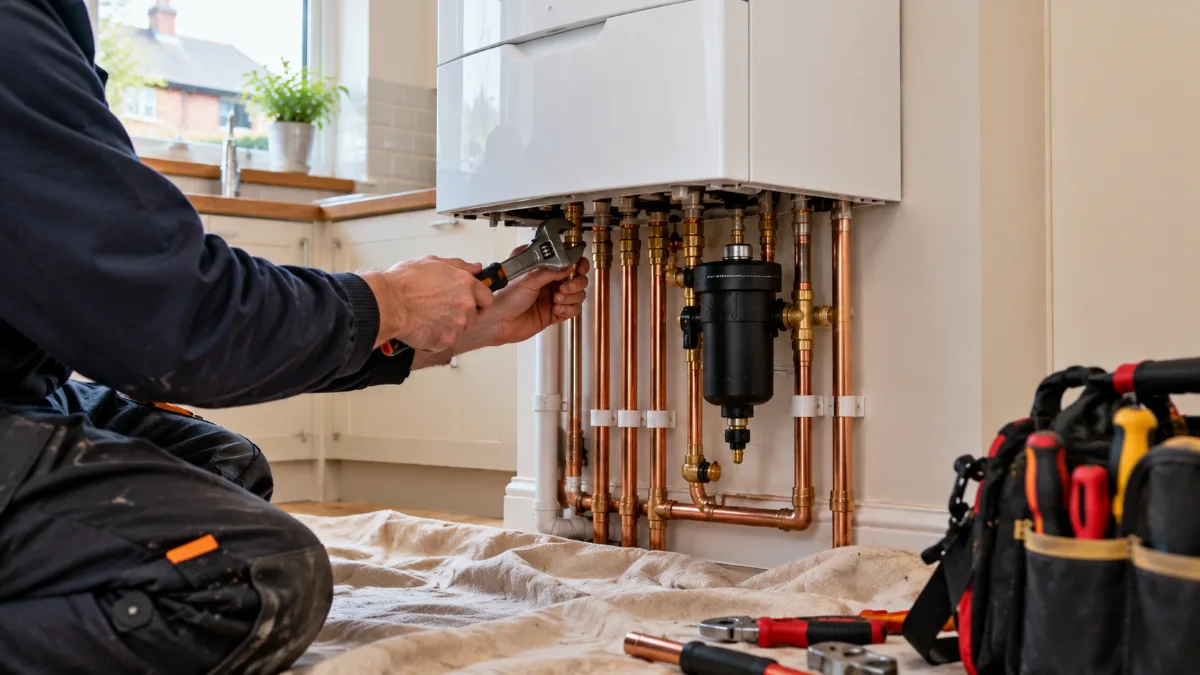
A like-for-like swap: one day
Combi out, combi in, same spot on the wall. This is the most common job we do, and it’s usually finished in one working day.
We’ll turn up in the morning, put dust sheets down and isolate the gas, water and electrics. Then we drain the system and take the old boiler off the wall.
New brackets and flue go in, and the new boiler goes up. We connect it, clean the system and fit a magnetic filter, then fill it up and fire it.
The last part matters most. We commission the boiler, check the gas rate and the combustion, set up the controls and show you how everything works. By teatime you should have heating and hot water back.
Changing the type of boiler: two to three days
Swapping a regular or system boiler for a combi is a bigger job. The hot water cylinder comes out, the tanks in the loft come down, and a fair bit of pipework has to be changed.
You’ll usually be without hot water for at least one night, and maybe two. We’ll talk you through the plan beforehand so there are no surprises.
Moving the boiler: two to three days
Moving a boiler from the kitchen to the loft or a utility room means new gas, water and condensate pipes, plus a new flue route. Lofts take the longest, because they need a fixed ladder, lighting and a boarded walkway as well.
Taking out a back boiler: one to two days
Removing an old back boiler from behind a gas fire is its own job. The fire and boiler come out, the flue’s made safe and a new boiler goes in somewhere sensible. We’ve written it up in detail in what happens when you remove a back boiler.
What slows a job down
Most jobs run to time. When they don’t, it’s usually one of these:
- the system is full of sludge and needs a heavier clean
- the flue route turns out to be harder than it looked
- the gas pipe is too small for the new boiler and has to be upsized
- a radiator valve snaps or starts leaking when we refill the system
That’s why we do a proper survey first. It’s how we spot most of this before the day, not halfway through it. There’s more on that in do I need a boiler survey.
How to get ready for installation day
Clear a path to the boiler and anywhere we need to get to, including the loft if there’s a tank up there. Move anything precious from the room.
If you’ve got pets, keep them out of the way. We’ll be coming and going and the doors will be open a lot.
And plan for no hot water for the day. Have a shower the night before. Boil the kettle for a flask in the morning if you’re staying home.
When is the best time of year to have a boiler fitted?
If you have the choice, spring and summer. You won’t miss the heating while it’s off, and it’s a lot easier to book a date that suits you.
From October onwards, we get busy with breakdowns, and installation slots fill up. Winter installs are absolutely fine. You just might have to wait a bit longer for the date you want.
The worst time is the day your old boiler finally dies in January. That’s the best argument for replacing a tired boiler before it goes.
Installations in Bristol and Bath homes
In a lot of Bristol terraces and semis, the boiler’s on the kitchen wall with the flue straight out the back. Those are usually our quickest jobs.
The ones that take longer tend to be bigger Victorian and Georgian houses, especially across Bath, where the boiler’s in a basement or loft, the pipe runs are long, and there’s often an old cylinder and tanks to deal with. Listed buildings can need more thought about where the flue goes too.
Frequently asked questions
Do I need to be home during the installation?
Ideally someone should be there at the start, to let us in and agree where everything goes, and at the end, so we can show you how the boiler and controls work. In between, you’re welcome to pop out. Plenty of customers leave us a key.
Will there be much mess?
Some, but we keep it to a minimum. We use dust sheets, clear up as we go and take the old boiler away with us. Jobs that involve lifting floorboards or taking out tanks and cylinders are a bit messier, and we’ll tell you beforehand if that’s likely.
When will I get my paperwork?
We register the boiler’s guarantee with the manufacturer and notify Building Control after the job. The Building Regulations compliance certificate usually arrives by post within a few weeks. Keep it safe with your guarantee paperwork, because you’ll need it if you ever sell the house.
Ready to book?
Call us on 01275 400 687 or get in touch online and we’ll arrange a free survey and a date that suits you.