







Fitting a split air conditioning system is a tidier job than most people expect. A single room is usually done in a day, with one neat hole through the wall, a bracket for the outdoor unit and the indoor unit up on the wall by the afternoon. A multi-room system takes about two days. It’s not a DIY job, though. The refrigerant side legally has to be done by an F-gas certified engineer. We install across both cities, and our air conditioning installation in Bath and Bristol pages cover the details. Here’s what actually happens, step by step.
Before the day: the survey
We’ll come and look at the room, measure it up and talk about how you’ll use it. Then we work out the right size of unit and the best spot for both halves.
Where the indoor unit goes matters. High on a wall, with clear space in front of it so the air can circulate. Not right above your pillow, so the airflow isn’t blowing straight at you. Not where curtains or furniture will block it, and not facing straight into the sun.
The outdoor unit needs good airflow, a solid wall or base, and ideally a spot away from neighbours’ windows. The shorter the distance between the two, the better.
You’ll then get a written quote.
Installation day
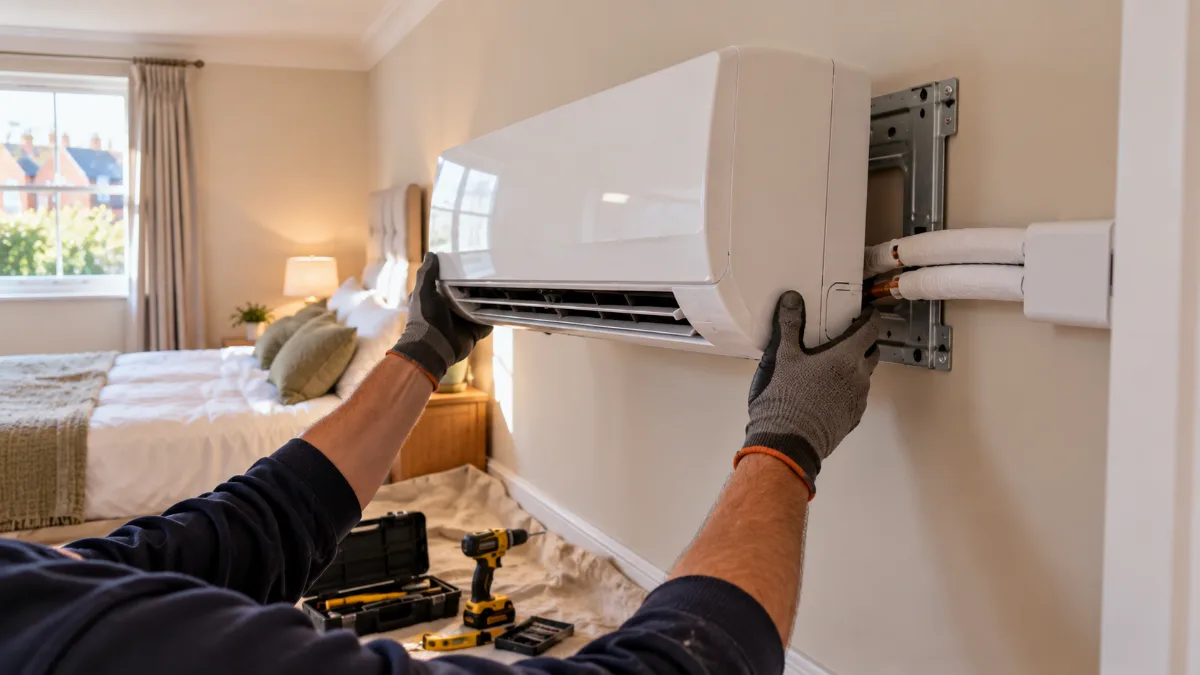
Mounting the indoor unit
We fix a mounting plate to the wall, level it and drill the hole through for the pipes, drain and cable. It’s around the size of a drainpipe. Dust sheets go down and we use a vacuum as we drill.
Fitting the outdoor unit
The outdoor unit goes on wall brackets or a ground stand, with anti-vibration feet to keep it quiet.
Running the pipes and cable
Two insulated copper refrigerant pipes, the condensate drain and the connecting cable run between the two units. Inside, they’re usually hidden behind the unit and through the wall. Outside, they go in neat trunking.
Electrics
The system is wired in, usually on its own spur from the consumer unit. If you need a new circuit, it has to meet the wiring regulations and be certified.
Vacuum and leak testing
This is the bit that separates a proper installation from a bad one. Before releasing the refrigerant, we pressure-test the pipework for leaks and pull a deep vacuum to get rid of air and moisture. Skip this and the system won’t last.
Commissioning
We open the valves, release the refrigerant, check the system’s running properly in heating and cooling and show you how to use the remote and the settings.
How long does it take?
A single split system is usually installed in one day. A multi-split with two or more indoor units usually takes two days.
Longer pipe runs, awkward walls or a loft with tight access can add a bit of time. We’ll tell you at the survey.
Can I install air conditioning myself?
Not a split system, no. Anyone handling refrigerant has to hold an F-gas certificate, and the company has to be certified too. We’re REFCOM registered, number 1021031.
You can buy “DIY” units online with pre-charged pipes, but they’re nowhere near as efficient, they can lose refrigerant, and a bad connection can mean leaks. Many manufacturers won’t honour the guarantee unless an F-gas certified engineer has installed and commissioned the system.
The electrical side matters too. Fixed wiring work has to meet the regulations. More on that in do you need an electrician to install air con.
Installing air conditioning in Bristol and Bath
A lot of our jobs in Bristol are in loft conversions and top-floor rooms, where the outdoor unit goes on the back wall or a flat dormer roof. Our Kingswood bedroom job is typical.
In Bath, thick stone walls take longer to drill through, and we take more care over where the outdoor unit sits on listed or conservation area properties. We’ll usually aim for the back of the building. We also cover the full air con installation in Bristol.
Frequently asked questions
How much mess does installation make?
Not much. The main mess is from drilling the hole through the wall, and we use dust sheets and a vacuum while we do it. The pipes are hidden behind the indoor unit, and outside they run in neat trunking. We take all packaging and waste away with us.
Where is the best place for the indoor unit?
High on a wall with a clear space in front so the air can circulate round the room. Avoid putting it directly above a bed or a desk, where the airflow blows straight at you. Keep it out of direct sunlight and away from curtains or tall furniture.
Do I need to be at home?
Someone needs to be there at the start to agree where the units go, and at the end so we can show you how it works. In between, you’re welcome to get on with your day.
Ready to book?
Ring us on 01275 400 687 or get in touch online for a free survey and fixed quote.