








Discovering water leaking from your boiler can be alarming – but it does not always mean the worst. Some leaks are caused by relatively minor issues such as high boiler pressure or a loose fitting, while others can point to a more serious internal fault that requires urgent attention.
The key is acting quickly. Left unchecked, even a small boiler leak can lead to water damage, corrosion, reduced heating performance, and costly boiler repairs in Bristol.
In many cases, a qualified Gas Safe engineer can diagnose and repair the issue quickly – often on the same day.
In This Guide:
- What to do if your boiler is leaking
- The most common causes of boiler leaks
- Whether your boiler can be repaired
- When you may need a replacement boiler
- How to prevent future boiler leaks
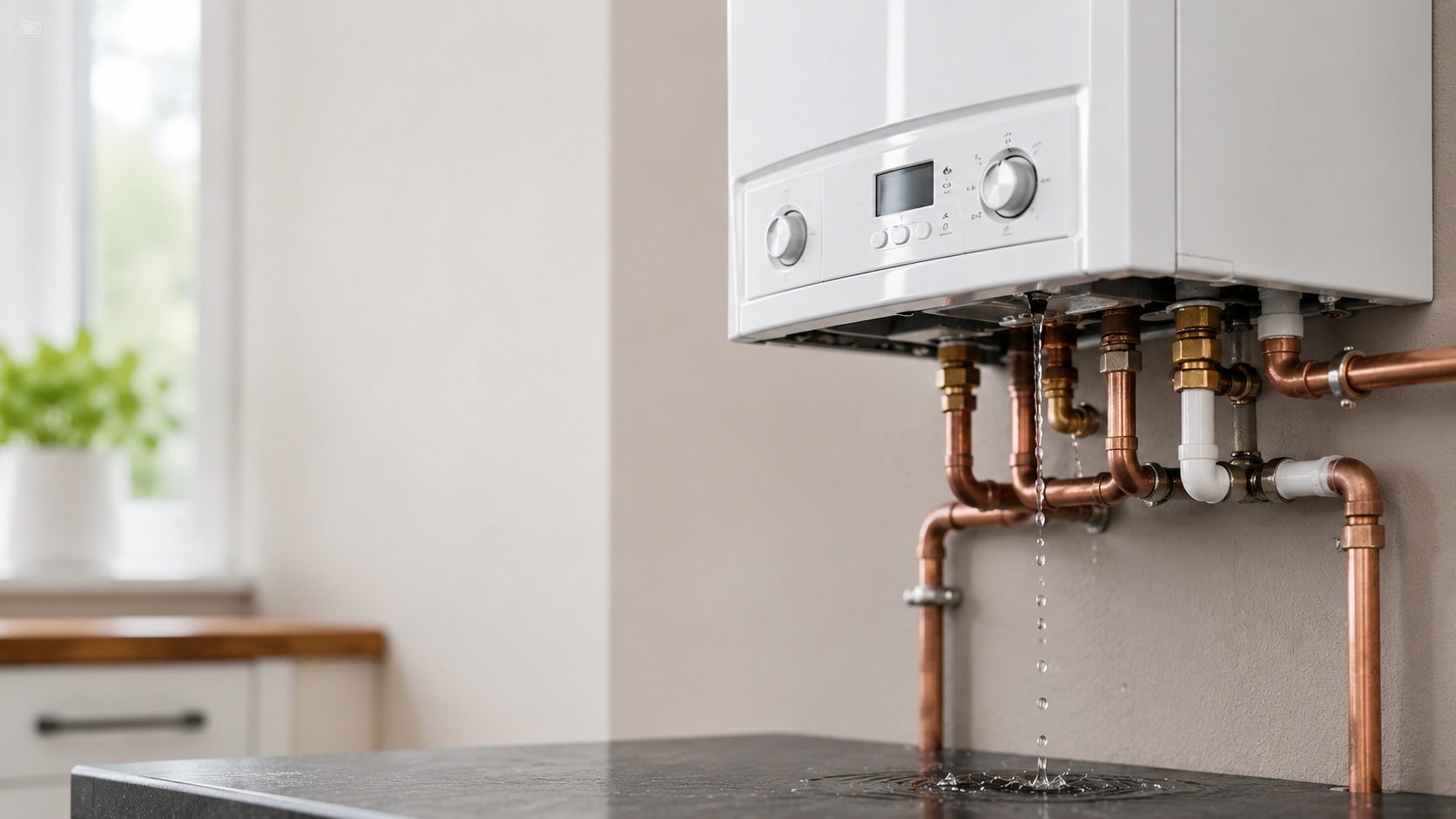
What To Do If Your Boiler Is Leaking
If you notice water coming from your boiler, follow these steps immediately.
Do not attempt to repair the boiler yourself. Boilers contain gas, electricity and pressurised water and should only be worked on by a Gas Safe registered engineer.
1. Switch Off The Boiler
Turn off your heating system using the thermostat or programmer, then isolate the electrical supply to the boiler if it is safe to do so.
This helps prevent further damage and reduces the risk of electrical faults.
2. Shut Off The Water Supply
Locate the isolation valve or stop tap connected to the boiler and turn it off if possible. This can help reduce the amount of water escaping from the system.
3. Contain The Leak
Use towels, a bucket or a container underneath the leak to minimise water damage to flooring, cupboards and nearby electrics.
4. Check The Boiler Pressure
Look at the pressure gauge on the front of the boiler.
Most systems operate normally between 1 and 2 bar. If the pressure is above this level or sitting in the red zone, high system pressure may be causing the leak.
5. Contact A Gas Safe Engineer
Call a qualified heating engineer as soon as possible and explain:
- Where the leak appears to be coming from
- Whether the boiler has lost pressure
- Any unusual noises or warning codes
- How long the problem has been happening
⚠ Gas Emergency
If you can smell gas, do not touch electrical switches or appliances.
Leave the property immediately, leave doors open if possible, and call the National Gas Emergency Service on 0800 111 999.
Common Causes Of A Leaking Boiler
There are several possible reasons why a boiler may start leaking water. The exact location of the leak often helps identify the underlying issue.
High Boiler Pressure
One of the most common causes of a leaking boiler is excessive pressure within the heating system.
If the pressure rises too high, the pressure relief valve (PRV) automatically releases water to protect the boiler from damage.
Signs of high boiler pressure include:
- The pressure gauge sitting above 2 bar
- Water dripping from the overflow pipe
- The boiler repeatedly losing pressure
- The heating system cutting out
In some cases, bleeding radiators or adjusting the filling loop can help reduce pressure, although the underlying cause should still be investigated.
Corroded Pipes Or Worn Seals
Over time, internal boiler components, pipework and seals can deteriorate due to age and corrosion.
This is especially common in older heating systems or systems that have not been serviced regularly.
You may notice:
- Water underneath the boiler
- Rust-coloured marks around pipework
- Damp patches near the appliance
- Visible corrosion on fittings or joints
In many cases, replacing seals or damaged pipe sections is a straightforward repair.
Faulty Pressure Relief Valve (PRV)
The pressure relief valve is a safety component designed to release excess pressure safely.
Over time, the valve itself can wear out and begin leaking continuously — even when pressure levels are normal.
This is a common and usually inexpensive repair for a heating engineer.
Expansion Vessel Failure
The expansion vessel helps regulate pressure changes as your heating system warms up and cools down.
If the vessel loses pressure internally or fails completely, pressure spikes can force water out through valves or internal seals.
Common signs include:
- Rapid pressure increases when heating starts
- Water discharging from the PRV
- Large pressure fluctuations
An engineer can normally repressurise or replace the vessel depending on the fault.
Cracked Heat Exchanger
The heat exchanger is one of the most important components inside the boiler.
If it becomes cracked due to age, corrosion or limescale build-up, water may begin leaking from underneath the appliance.
Signs may include:
- Water leaking from the bottom of the boiler
- Reduced heating efficiency
- Staining around the boiler casing
- Repeated pressure loss
A damaged heat exchanger is often one of the more expensive boiler repairs. Depending on the boiler’s age and condition, replacement may be more cost-effective.
Why Is My Boiler Leaking From Underneath?
If your boiler is leaking from underneath, the issue is often linked to:
- Loose internal pipe connections
- Worn pump seals
- A faulty heat exchanger
- Corrosion inside the boiler
- A blocked or damaged condensate pipe
If possible, try to identify exactly where the water is coming from before the engineer arrives. Taking a photo can also help with diagnosis.
Is A Leaking Boiler Dangerous?
A leaking boiler is not always immediately dangerous, but it should never be ignored.
If left unresolved, boiler leaks can:
- Damage electrical components
- Cause internal corrosion
- Reduce heating efficiency
- Create damp and water damage
- Shorten the lifespan of the boiler
The sooner the issue is diagnosed, the lower the risk of expensive repairs or breakdowns.
Can A Leaking Boiler Be Repaired?
In many cases, yes.
Common boiler leak repairs include:
- Replacing seals or washers
- Repairing pipe joints
- Replacing pressure relief valves
- Fixing expansion vessels
- Repairing condensate pipes
However, if your boiler is older, inefficient or suffering from major component failure, replacing the boiler may offer better long-term value.
How To Prevent Boiler Leaks
The best way to prevent boiler leaks is through regular servicing and maintenance.
An annual boiler service allows an engineer to:
- Check for corrosion and wear
- Inspect seals and valves
- Test system pressure
- Identify developing faults early
- Improve efficiency and reliability
You should also keep an eye on your boiler pressure throughout the year. If pressure regularly drops below 1 bar or rises above 2 bar, it is worth having the system checked.
Need Help With A Leaking Boiler?
Our Gas Safe registered engineers provide boiler repairs, servicing and replacements across the local area.
We offer fast response times, transparent pricing and honest advice to help you get your heating and hot water back up and running as quickly as possible.
Contact us today to arrange a boiler inspection or emergency repair.